

Dry Goods & Sifting Guide
Dry goods language can be confusing at first because plant part and processing form are often listed together. This guide explains the difference between what part of the plant is being used and how that plant material has been handled.
At Perky Foraging Company, plant part and form are treated as separate pieces of information.
Plant Part answers: What part of the plant is this?
Form answers: What condition or processing style is it in?

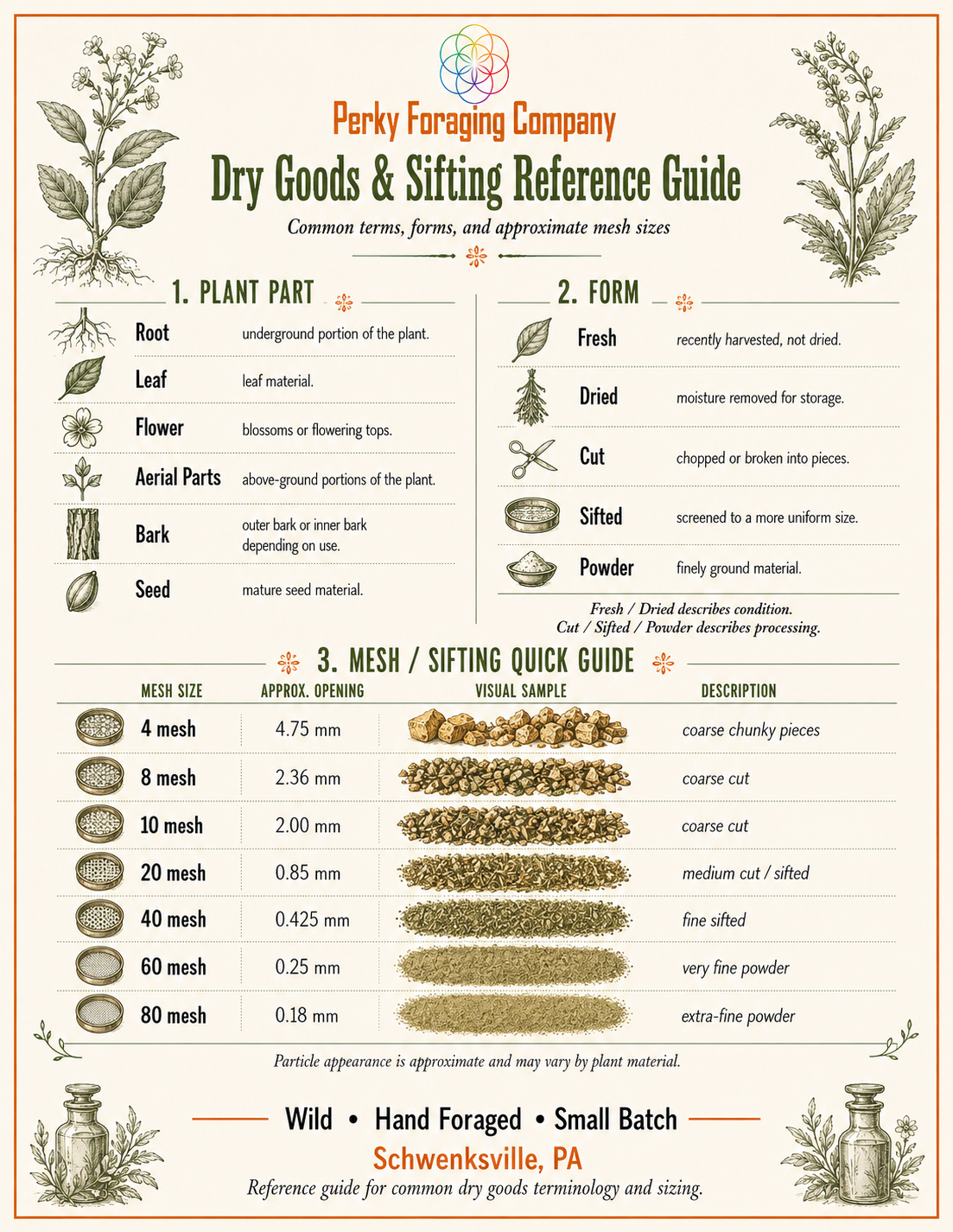
Seasonal Dry Goods:
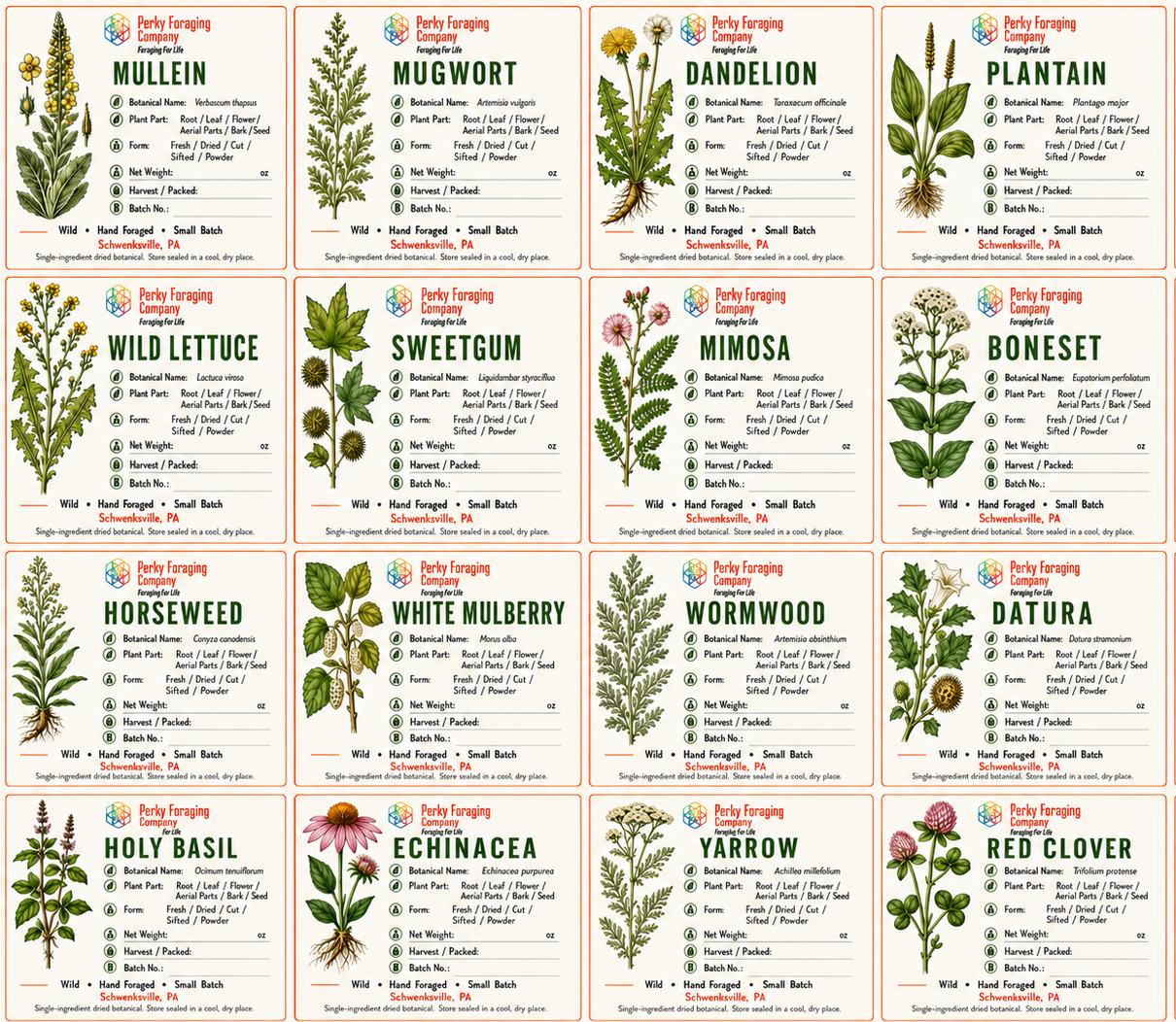
Plant Part
Form
Root - the underground portion of the plant.
Leaf - the leaf material of the plant.
Flower - the blossom or flowering portion of the plant.
Aerial Parts - above-ground portions of the plant.
Bark - outer or inner bark of a woody plant, depending on use.
Seed - mature seed material of the plant.
Mesh & Sifting
Fresh - recently harvested plant material that has not been dried.
Dried - plant material with moisture removed for storage.
Cut - plant material chopped or broken into smaller pieces.
Sifted - plant material screened through mesh to create a more consistent size.
Powder - finely ground plant material.
Whole - plant material kept largely intact.
Mesh size describes the size of openings in a sieve or screen. A lower mesh number generally means a larger opening and a coarser finished material. A higher mesh number generally means a smaller opening and a finer finished material.
Particle appearance is approximate and may vary by plant material.
Labeling Note:
A dry goods label may show both plant part and form. For example:
Plant Part: Leaf
Form: Dried / Cut / Sifted
This means the product is leaf material that has been dried, cut, and sifted.